
What is "the Gospel"?
On the good news and formulae

I grew up in the Church (literally--as I’ve said before, my dad was a pentecostal preacher in my childhood years, and we lived in an apartment built in the top of the church building). But, like many others, I had a particular “awakening” experience of faith when I was much older. For me, it was in my first couple years of college, through Campus Crusade.
Part of the experience in Campus Crusade (which for me didn’t last very long), was learning to “share the gospel” with others. We did this through explaining ‘the Four Spiritual Laws’: “God loves you and offers a wonderful plan for your life. All of us sin and our sin has separated us from God. Jesus Christ is God’s only provision for our sin. Through Him we can know and experience God’s love and plan for our life. We must individually receive Jesus Christ as Savior and Lord; then we can know and experience God’s love and plan for our lives.” The idea was that these four statements compressed all that was essential for becoming a Christian. All one had to do to convert and ‘be saved’ was to understand these ‘laws’ and accept them, then say a prayer to ‘accept Jesus’ as one’s personal savior.
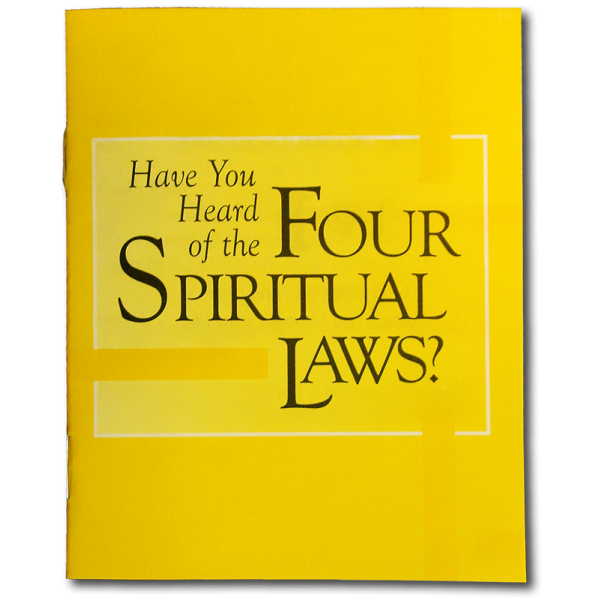
Though this came to seem a bit simplistic for me, throughout my years as a Protestant it continued to seem natural to me that ‘the Gospel’ was something that could be stated in a few sentences at most, and which had primarily to do with the atonement. In becoming Orthodox, the primary emphasis definitely shifted. Most fundamentally, a turning point for me consisted in coming to see the incarnation itself as the primary locus of Christ’s work, and in seeing salvation as more about deification and union with God, rather than mere forgiveness of sins or a “forensic” act of declared innocence--as something “existential” rather than “legal.”
Now, however, it seems absurd to try to reduce ‘the Gospel’, the good news for humanity and the cosmos to a sentence or two. Too much is left out. What about the Church? The Trinity? What about God’s real presence in all of creation? What about there being neither Jew, nor Greek; neither man, nor woman, for all are one in Christ Jesus? What about Goodness, Truth, and Beauty being identical in the One Source? What about the details of the life to which Christians are called? If there is good news for the world, it is all of that.
It’s no wonder that for me the Gospel became identified with a formula through Campus Crusade. The idea of trying to express fundamental Christian truths through simple formulae of course is ancient and biblical. But only in a modern evangelical revivalism where preaching is primarily aimed at individual conversion, could it become widespread to think of “the Gospel” as reducible to a set of instructions. (I should say that of course I am still grateful to Campus Crusade; its force in my life was positive.)
Still, I have sometimes felt a bit bad in my uncertainty that I could confidently say in a very short space what the Christian gospel is. So, I’ve been trying to think of how I would express it now, in a single sentence, if I were forced. Here’s the best I came up with (cheating a bit with the use of semi-colons). The Gospel in brief: “God, the source and ground of reality, loves us; has revealed himself to us in Jesus Christ; has united our humanity to himself and overcome death and all separation on our behalf; and invites us into the life of his kingdom.”
What do you think? What would your version be?
As a college student I was trained to use the Four Spiritual Laws in evangelism, and even then I felt uncomfortable with it, as it struck me as the sort of sales pitch an insurance salesman would use. I don’t think we should feel bad if we are reluctant to reduce the Gospel to a sound bite, a commercial, or a 30-second elevator pitch. In some way, feeling bad about our inability to condense God’s truth in that way shows we are still subject to the influence of Protestant reductionism.
That said, of all the things in the Orthodox Church, the one that to me provides a clear headline to the Gospel is the Paschal Troparion: “Christ is risen from the dead, trampling down death by death, and upon those in the tombs bestowing life!” Further details of the Gospel need to not merely be read or spoken but actually experienced within the life of the Holy Spirit in the one, holy, catholic, and apostolic Church.
I don't have a good definition of "the Gospel," other than to point out that if the standard evangelical Protestant definition is correct, then the "Gospels" themselves are abject failures, or at least chronically off-topic. Moreover, salvation as "assent to a particular definition of salvation" (which is what the standard American Protestant "gospel message" really is) strikes me as basically a form of works-righteousness in disguise, only the effort becomes intellectual instead of moral. It's still a form of saving yourself, at least according to Protestant logic.